This is a trip report for my thru-hike of most of the JMT from July 3-9, 2018. I’ll try to focus more on pictures than verbose monologues, as I tend to find those much more interesting and effective at storytelling.
The JMT is one of those must-dos for any California backpacker and it has been on my radar for a while. For the past 3 or 4 years, it’s been one of those things I would do when circumstances lined up. In the mid summer of 2018, those circumstances finally lined up.
The Plan
Not wanting to deal with all of the regulations imposed on JMT hikers in Yosemite (trailhead quotas, Donohue Pass exit quotas, lectures from ranger, etc.), I secured a permit to start at the Rush Creek Trailhead on Tuesday, July 3 finishing at Whitney Portal about ten days later. This is the northernmost trailhead that connects directly to the JMT without passing through Yosemite National Park, leaving it free from the Donohue Pass exit quota. My hike would be about 190 miles, 170 of which were on the JMT. The reservation wasn’t hard to obtain, I think I reserved my permit four weeks in advance. I would imagine walk-ups aren’t a problem, except perhaps on the busiest Saturdays.
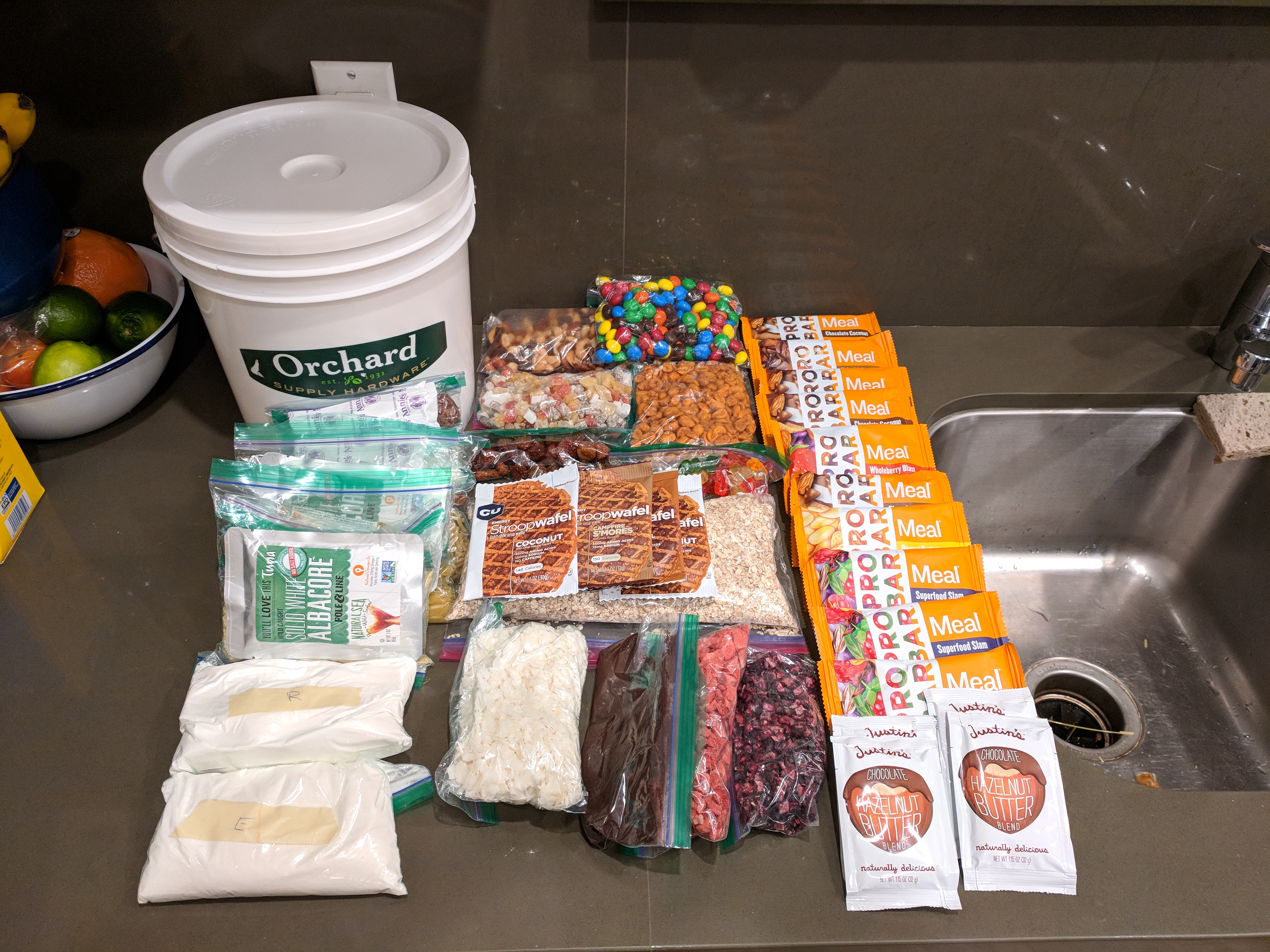
Three weeks in advance, I mailed a 12 pound bucket of food to myself at Muir Trail Ranch (MTR). It was 80 miles from Rush Creek to MTR and then 100 more to Whitney Portal. I planned it out pretty meticulously: 4,000 calories a day for 9 days. I would start with 4 days of food, and pick up 5 more days worth at MTR. If I went slower than that (20 miles a day), I would just bail early. For the abundantly curious, here’s my food planning doc. I would be happy to provide comments on what worked and what didn’t if anyone is interested.
I wasn’t really too concerned about running into trouble due to injury, gear failure, or other cause. The JMT/PCT sees dozens (if not hundreds) of hikers pass through any given stretch in a day. Most of them are carrying some kind of PLB/Satellite Phone, at least a basic first aid kit, and probably too much food. On top of that, there are options to bail over a pass back to the Owens Valley every 10 or 15 miles. I counted 12 different opportunities to exit, and that’s only the ones with maintained trails. That’s why some folks call the JMT “The Highway.”
Training
I didn’t do much training specifically for this trip, relying instead on my general fitness. That said, many would consider my baseline level of activity to be training. I usually run 50-70 miles a week and do backpacking trips twice a month, usually around 20 miles.
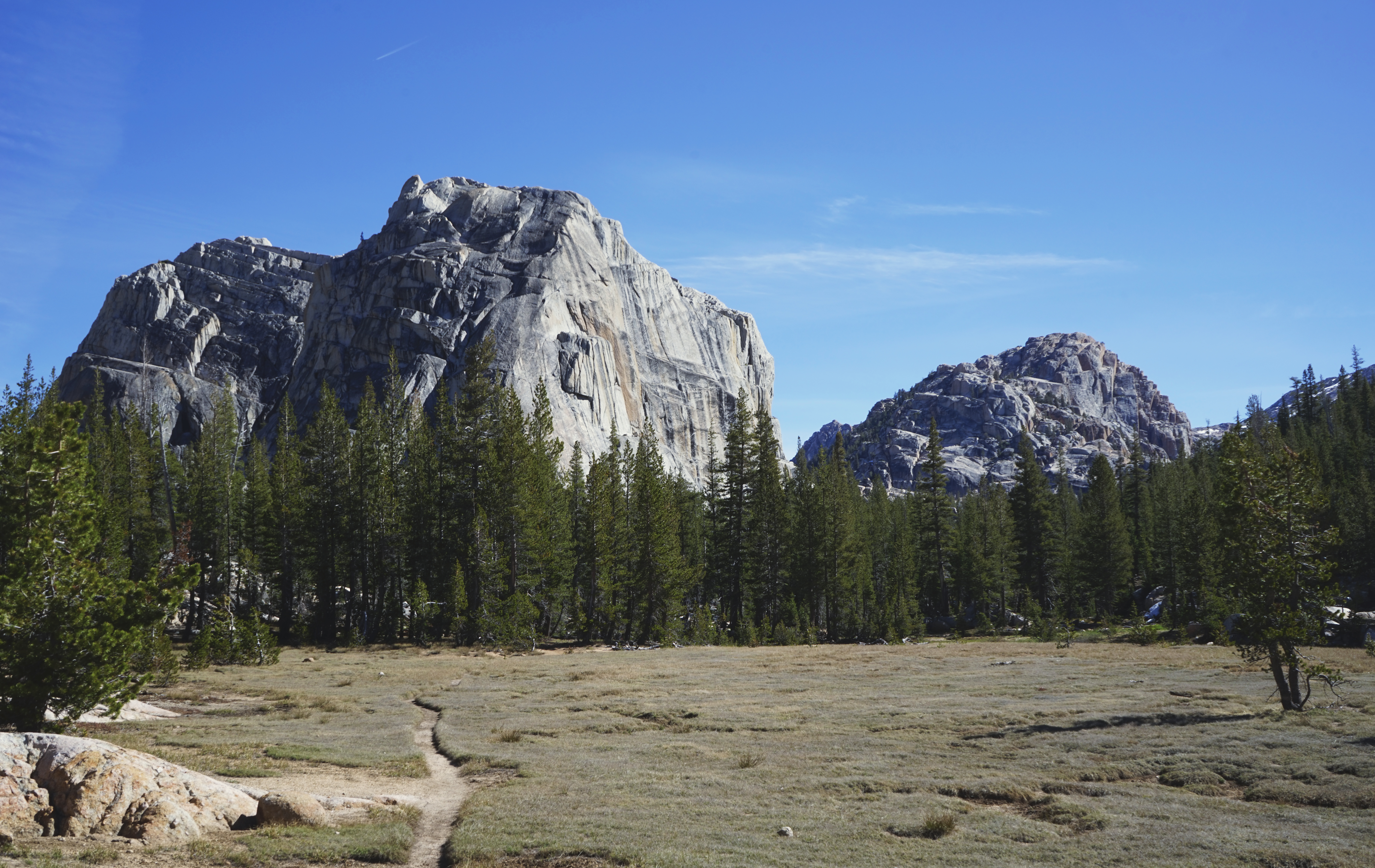
That said, I did take two weekend trips in the lead up to the JMT that were a bit bigger than my usuals: in March I did a 50 mile loop out to the Orestimba Wilderness in Henry Coe, and in June a 40 mile out-and-back to Benson Lake in Yosemite. Neither of these really indicated I would be able finish this JMT route in under 8 days, so I planned my food and timing for 8-9 days, thinking that to be a reasonable goal.
Gear
I have a fair bit of backpacking experience and through trial and error have dialed in what works for me. I wasn’t super careful about my pack weight for this trip, my baseweight was probably 20 or 22 pounds and I carried a few ultralight no-nos such as a DSLR camera and five batteries, a full mummy bag, and a freestanding tent (and fly). Fully laden, I was about 38 pounds.
Rather than act as a shill for my preferred brands (that’s super boring anyways), let me know if you care about the specific gear I brought and I can try to provide advice.
Okay, enough of my yammering, let’s get down to it.